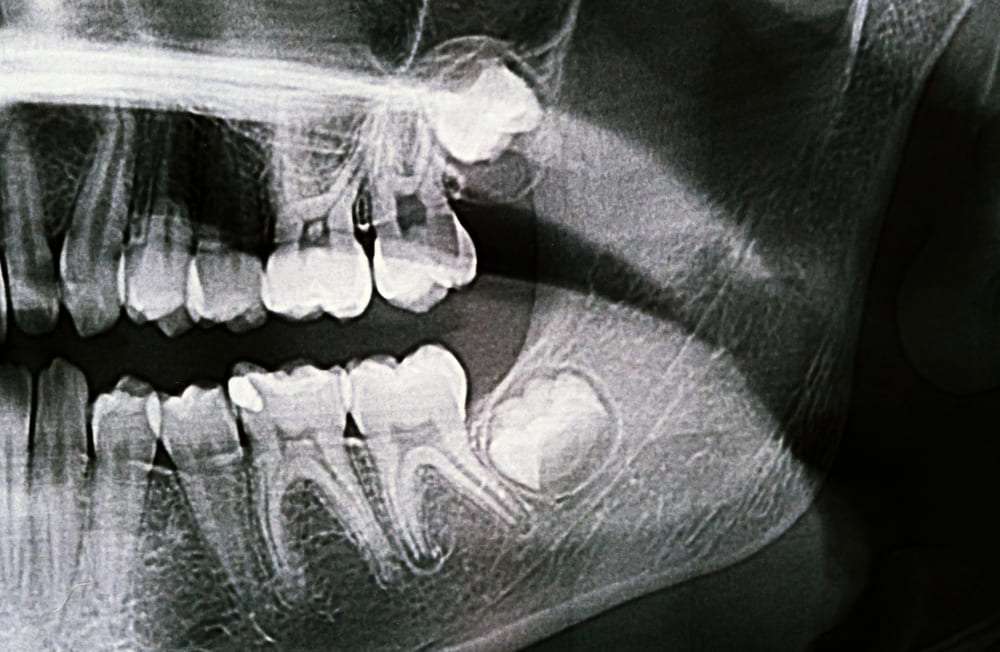
Not all wisdom teeth cause discomfort from the moment they appear. Some people live with them for years without noticing any change, while others start to experience swelling, pain or difficulty opening the mouth from one day to the next. When these symptoms appear, it is normal to wonder whether the time has come to remove them and what the process will be like. So, if you are looking for information about wisdom tooth extraction in Costa del Este, it is important to know what the procedure involves and why a professional assessment makes the difference.
At Dental Life we understand that the idea of an extraction often creates uncertainty. Before recommending any treatment, we carry out a complete evaluation to determine whether intervening is really necessary. Every case is different and the decision depends on factors such as the position of the teeth, the available space and the impact they may have on the rest of the teeth.
Not all wisdom teeth need to be removed
There is a belief that all wisdom teeth must be removed, but that is not always true. When these teeth come in correctly, have enough space and do not affect oral health, they can stay without causing problems.
The picture changes when they remain partially or fully trapped in the bone, grow in the wrong position or press on neighboring teeth. In those scenarios, extraction is usually recommended to prevent future problems before major complications appear.
How do we know when it is time to remove them?
X-rays and the clinical evaluation make it possible to identify situations that often cause no obvious symptoms. Waiting for pain to appear is not always the best strategy, since some changes advance silently. Among the most frequent reasons to recommend extraction are:
- Repeated episodes of inflammation.
- Infections around the tooth.
- Constant or intermittent pain.
- Lack of space for a proper eruption.
- Risk of affecting adjacent teeth.
- Cysts associated with the tooth.
How the procedure goes, step by step
One of the most common questions is what happens during the extraction. Before starting, we carry out a detailed assessment to know the exact position of the tooth and plan the intervention.
The procedure is done with local anesthesia to ensure the patient’s comfort. Depending on the complexity of the case, the extraction may require a small incision in the gum or dividing the tooth to remove it safely and conservatively.
Our goal is always to carry out the treatment with the greatest possible precision, minimizing the impact on nearby tissues and supporting proper recovery.
The first days influence recovery
After the extraction, the body begins a natural healing process. During the first hours it is normal to have mild swelling, sensitivity or difficulty opening the mouth fully. To support proper recovery we usually recommend:
- Applying cold to the area during the first hours.
- Following the prescribed medication.
- Eating soft foods.
- Avoiding smoking.
- Not using straws to drink.
- Keeping careful oral hygiene following the specialist’s instructions.
A calm recovery depends on good habits
Many later complications are not related to the extraction itself, but to the care during the following days. Touching the area, making intense physical effort or ignoring the instructions can delay healing.
Every body responds differently. While some people quickly return to their usual activities, others need a few additional days to feel fully recovered. What matters is attending the indicated follow-up and reporting any symptom outside what is expected.
Making the decision in time can avoid future discomfort
When a wisdom tooth poses a risk to oral health, postponing the extraction usually lets the problem advance and cause pain, infections or damage to other teeth.
At Dental Life we have a multidisciplinary team and diagnostic technology that allow us to plan each procedure in a personalized way, prioritizing the safety, well-being and comfort of every patient.
If you have discomfort or want to know whether your wisdom teeth need to be removed, we invite you to contact us and schedule an evaluation with our team in Costa del Este, Panama.
If you want to keep learning about prevention, dental treatments and recommendations to care for your oral health, keep exploring our blog, where we share practical information to help you make informed decisions.
FREQUENTLY ASKED QUESTIONS
At what age is it advisable to evaluate wisdom teeth for the first time?
Although wisdom teeth usually appear between the ages of 17 and 25, it is advisable to have them evaluated before they finish developing. An X-ray shows their position and anticipates possible complications, making preventive decisions easier while they have not yet caused discomfort.
Is it possible to work or study the day after a wisdom tooth extraction?
It depends on the complexity of the procedure and on how each person responds during recovery. After simple extractions, some patients go back to their activities quickly, while others need a day or two of rest to reduce swelling and feel fully comfortable.
Which foods help recovery after a tooth extraction?
During the first days it is recommended to eat soft foods at room temperature, such as purees, yogurt, warm soups or compotes. Avoiding very hot, hard or crunchy foods helps protect the area and supports proper healing.
What signs mean I should contact the dentist again?
If you have a fever, swelling that increases after several days, persistent bleeding, intense pain that does not improve with medication or discharge from the extraction area, it is important to be evaluated. Early care makes it possible to identify any complication and treat it in time.
Can all four wisdom teeth be removed in a single appointment?
Yes, in some patients it is possible to remove all four teeth during the same session. The decision depends on the clinical evaluation, the complexity of the case and general health conditions, always looking for the most convenient option for the patient.